MSL Buzz: the Michael Schwartz Library Blog

MSL buzz: the Michael Schwartz Library blog

Showing 10 of 48 Results

04/15/2024
profile-icon Donna Stewart


Creative Teaching Solutions: Open Pedagogy and Student-Centered Learning

a special guest presentation by Heather Miceli, Postdoctoral Research Fellow at AAC&U and former faculty member at Roger Williams University.

April 16th, 11:30-12:20pm ET
via zoom - Register here

Our students are looking for classroom experiences that are meaningful, engaging, and empowering. One way to achieve this is to employ open pedagogy, an approach to teaching that prioritizes student-centered learning and the use of open educational resources. Join us for a special guest presentation by Heather Miceli, Postdoctoral Research Fellow at AAC&U and former faculty member at Roger Williams University. Heather will share her own experience with open pedagogy and lots of practical tips for how to integrate this approach to teaching into your classroom.

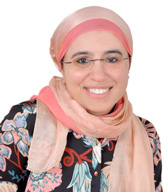
Dr. Heather Miceli

About Heather Micieli

Dr. Heather Miceli is currently a Postdoctoral Research Fellow with the Office of Curricular & Pedagogical Innovation at the American Association of Colleges & Universities (AAC&U), where she is working on a Hewlett Foundation funded research grant investigating the impact of OER on student outcomes. Prior to working at AAC&U, Heather was a lecturer at Roger Williams University, where she taught non-majors science in their general education program. In those classes, she was a practitioner of open pedagogy and collaborative grading. She was a curriculum designer and is an instructor of the Certificate of Open Educational Practices offered by The Open Education Network and is on the OER Advisory Committee for the New England Board of Higher Education.

03/22/2024
profile-icon Donna Stewart

meet our previous textbook heroes


WHO ARE YOUR HEROES? NOMINATE THEM FOR A TEXTBOOK HERO AWARD!


Co-sponsored by the Michael Schwartz Library and the Student Government Association, the Textbook Hero Award is awarded annually to a faculty member who has put forth significant effort to replace a traditional textbook with a low-cost or open alternative, and whose efforts had a high impact on textbook costs, classroom engagement, and student achievement.


STUDENTS: Do your professors consider the costs of your course materials when they choose them? So many CSU faculty do, and to all of them, CSU students say THANK YOU!  Nominate your prof today, and help us encourage others to get on the bandwagon.  We've already saved CSU students $1.7M in texbook costs!


FACULTY: If you are an affordability advocate, please encourage your students to nominate you for a Textbook Hero Award!  This teaching award is presented by the CSU Student Government Association and can be a valuable addition to your promotion and tenure portfolio.  Give your students a chance to formally say thank you! 
 

Textbook Hero Award Application, due April 5th, 2024:
 Nominate Your Hero Now!

meet our previous textbook heroes


03/20/2024
profile-icon Donna Stewart


CSU Faculty: Apply for the 2024 CSU Textbook Affordability Summer Symposium
- deadline extended to April 19th! -


  • Are you interested in exploring options for reducing the cost of textbooks in one of your courses? affordable learning at Cleveland State University
  • Are you looking to revitalize the materials in one of your upcoming courses? 
  • Do you want to increase the ease of access to your course materials, but you’re unsure where to start? 
  • Do you want to learn more about open education or open textbooks? 
  • Are you seeking structured support for integrating low- or no-cost materials into one of your upcoming courses?  

If you answered yes to any of these questions, CSU’s Textbook Affordability Summer Symposium might be just what you need!  


Textbook Affordability Summer Symposium 

  • What: A learning community with hosted asynchronous workshops over 3 weeks providing methods and materials to support faculty in reviewing openly-licensed or other affordable course content.

  • When: May 20th – June 7th; asynchronous; 6 – 10  hours of work.

  • Where: Blackboard  

  • Who: All full-time or part-time CSU faculty are welcome to apply.
    Teams of faculty, faculty teaching high enrollment or gateway courses, faculty who are proposing courses for the new Core
    and/or those planning to teach courses within any of the new Integrated Majors are especially encouraged to participate.

  • Incentive: A $600 stipend, disbursed in two parts, for completing the symposium.

  • Why: low- or no-cost course materials support student learning and persistence. 


To apply:
Fill out our application form by April 19th, 2024.  

Applications will be reviewed and acceptance communicated to participants by the end of the month.  

For more information, email Heather Caprette or Emilie Zickel, co-chairs of the CSU Open Educational Resources Committee  

We look forward to advocating for affordable learning with you!  


How does the program work?  

Step One: By April 10th, complete and submit your application form and submit the syllabus for the course in which you are interested in using an OER.  

Step Two: If you are selected to participate, CSU Librarians will review your syllabus and map suggested openly-licensed, affordable, or library-licensed content to syllabus topics.   

Step Three: From May 20th – June 7th, participants will engage in the Textbook Affordability Summer Symposium on Blackboard/Zoom. Participants will explore the basics of open education, review an open access or low cost resource, learn how to align course content with learning outcomes, and reflect on advocating for affordable or open access course materials in the future. There are four modules of content, each of which should take 1.5-3 hours to complete.  

As part of the symposium, each participant will:  

  • Meet one-on-one for a single Zoom meeting with one of the symposium instructors  

  • Review at least one openly-licensed, library-licensed, or low-cost resource in their discipline (preferably one found in the Open Textbook Library) by June 7th, 2024. 

  • Create a curriculum map to align the open access or low cost resource to their course  

  • Write a short report outlining how they will take action to implement the use of the openly licensed content across all sections/semesters of the course in their department   

Step Four: After the training, each participant will:  

  • Use at least one openly-licensed, library-licensed, or low-cost resource (required or optional) in a course they are teaching in Fall 2024 or Spring 2025 OR create and use openly licensed ancillary materials (e.g., quiz questions, PowerPoint slides, etc.) for a course they are teaching in Fall 2024 or Spring 2025 
  • Speak at a future open textbook workshop or talk offered by the Center for Faculty Excellence, Michael Schwartz Library, or other institution, if approved.  

Each participant will receive a $600 stipend for participating in the symposium.   

The following applicants will receive special consideration:   

  • Multiple faculty teaching the same course  

  • Faculty teaching high enrollment courses or gateway courses   

  • Faculty who are proposing courses for the new Core and/or those planning to teach courses within any of the new Integrated Majors 


Faculty who have already received a Textbook Affordability Grant or participated in a previous Textbook Affordability Summer Symposium will not be eligible to participate, but participants in the Summer Symposium are eligible and encouraged to apply for future Textbook Affordability grants


Apply Today!

03/01/2024
profile-icon Donna Stewart


Exploring the Intersections of Artificial Intelligence and Open Educational Resources

Join us for a FREE webinar presented by Cleveland State University in partnership with The Ohio State University!

March 6, 2024
1-2pm EST
Register: https://forms.office.com/r/bZauKuNbg1
 

The rise of generative AI tools has created significant excitement and concern among educators over the past year. The intersections between AI and Open Educational Resources (OERs) raise many significant questions and opportunities. How can AI be used to support the development of OERs? What challenges does AI create for OERs? This presentation will provide an overview of generative AI, provide considerations for teaching with AI, explore the intersections between AI and OERs, and share resources for participants interested in learning more about these topics.


Learning Outcomes:
  • Participants will gain understanding of generative AI tools, including their capabilities, applications, and their impact.
  • Participants will learn how to leverage generative AI tools to support the development of Open Educational Resources (OERs), exploring practical applications and potential benefits in educational content creation.
  • Participants will explore some of the pedagogical implications for AI in teaching and learning
  • Participants will be equipped with resources to delve deeper into the intersection of AI and OERs, including recommended readings, tools, and platforms.

Speakers:
Amanda Larson
Amanda Larson
The Ohio State University

Amanda works as the Affordable Learning Instructional Consultant at The Ohio State University. Her role involves organizing professional development programs for staff, librarians, and instructors on open pedagogy and open educational practices. Additionally, she was the Open Pedagogy Fellow for the Open Education Network. In this capacity, she developed a curriculum for facilitating a learning circle focused on Open Pedagogy and conducted a pilot learning circle program for instructors, instructional designers, and librarians.


Michael Flierl
Michael Flierl

The Ohio State University


Michael Flierl is an Associate Professor and Student Learning Librarian in The Ohio State University Libraries. His research investigates how students can more intentionally, creatively, and ethically use information and data to learn. Michael has recently explored dual-use foundational AI models—presenting on this subject to the Ohio State University Senate, the Ohio State University’s College of Medicine’s Education Leadership Team, and international conferences. He has published in College & Research Libraries, The Journal of Academic Librarianship, and Library & Information Science Research. Michael is currently a Fellow at the Institute for Information Literacy at Purdue and the Special Issues Editor for Reference Services Review.
 

Jane Hammons

Jane Hammons
The Ohio State University

Jane Hammons is an Assistant Professor in The Ohio State University Libraries. As the Teaching and Learning Engagement Librarian, her work centers on the integration of information literacy into the curriculum through instructor development. She is also a Senior Affiliate at Ohio State’s Michael V. Drake Institute for Teaching and Learning. Jane has published her work in the Journal of Academic Librarianship, the Journal of Information Literacy, and portal: Libraries and the Academy and has forthcoming presentations in the Journal of Faculty Development and To Improve the Academy.


10/20/2023
profile-icon Donna Stewart


International Open Access Week is October 23-29, 2023
This Year's Theme:  Community Over Commercialization


This year's theme of  “Community over Commercialization” provides an opportunity to join together, take action, and raise awareness around the importance of community control of knowledge sharing systems, and encourages a candid conversation about which approaches to open scholarship prioritize the best interests of the public and theInternational Open Access Week 2023 academic community—and which do not. 

The UNESCO Recommendation on Open Science highlights the need to prioritize community over commercialization in its calls for the prevention of “inequitable extraction of profit from publicly funded scientific activities” and support for “non-commercial publishing models and collaborative publishing models with no article processing charges.” By focusing on these areas, we can achieve the original vision outlined when open access was first defined: “an old tradition and a new technology have converged to make possible an unprecedented public good.”

When commercial interests are prioritized over those of the communities that research seeks to serve, many concerning issues arise. Open Access Week provides an opportunity for individuals to discuss questions that are most relevant in their local context. These might include:

  • What is lost when a shrinking number of corporations control knowledge production rather than researchers themselves?
  • What is the cost of business models that entrench extreme levels of profit?
  • When does the collection and use of personal data begin to undermine academic freedom?
  • Can commercialization ever work in support of the public interest?
  • What options for using community-controlled infrastructure already exist that might better serve the interests of the research community and the public (such as preprint servers, repositories, and open publishing platforms)?
  • How can we shift the default toward using these community-minded options?


Here are just some of the ways you can participate:
 

Visit the Open Access information table: What is Open Access? and the OpenStax Exhibit in the Library all week for free resources that can benefit you. Review the full schedule of events and create your own itinerary.

  • Get Advice from Your Colleagues
    Some of our faculty participants in CSU’s Textbook Affordability Summer Symposium recorded short videos to describe their experiences using open educational resources (OERs) and to provide advice for other faculty considering doing the same. These videos demonstrate the value of OERs for student achievement, as well as CSU faculty members’ commitment to student success. These videos are online and can be viewed anytime. https://engagedscholarship.csuohio.edu/oer_reflections/
     
  • Learn from the Experts to Expand your Research
    Do you have questions about expanding your research impact? Learn what EngagedScholarship @ Cleveland State University can do for you in this pre-recorded webinar, including publishing journals or books; posting articles; creating your own Scholars Page; learning about copyright; measuring your impact with PlumX Metrics, and more.
     
  • Register for an ORCID account
    Visit the Reference Center during Open Access week to register for an ORCID account and receive your own persistent digital identifier that distinguishes you from every other researcher. A Reference Librarian or Consultant can help you register in minutes!
     
  • Announcing our Fall 2023 Textbook Affordability Small Grants for Faculty

    Textbook Affordability Grants are offered through the Michael Schwartz Library to encourage and support the creation or compilation of low-cost or no-cost course materials. Faculty whose projects are selected will receive grant amounts ranging from $500 to $2500 depending on the project. Appropriate support to create or compile an open educational textbook or other educational resources to replace a traditional, high-cost textbook will be provided by the Michael Schwartz Library, the Center for eLearning, the Center for Instructional Technology and Distance Learning, and the Center for Faculty Excellence. Five awards are available.


About Open Access Week

Now in its sixteenth year, International Open Access Week facilitates the growing movement toward increased discoverability, sharing, use and preservation of information.  Academic and research communities are invited to learn how open access maximizes and promotes their work, provides stronger ownership for researchers and authors, and ultimately, has far reaching benefits for academia and society as a whole.International Open Access Week

06/12/2023
profile-icon Donna Stewart


The Way We Are: 100 Plain Dealer Op-Eds by Thomas E. Bier 

The Way We Are: 100 Plain Dealer Op-eds by Thomas BierCleveland State University's MSL Academic Endeavors, publishing imprint of the Michael Schwartz Library, is pleased to announce the publication of a new book titled The Way We Are: 100 Plain Dealer Op-Eds by Thomas E. Bier. Available exclusively from EngagedScholarship @ Cleveland State University, the book contains 100 op-ed articles submitted by Thomas Bier to the Plain Dealer and published between 1977 and 2022. Most of the articles concern a current event or issue in the city of Cleveland and/or communities in Northeast Ohio. 100 articles involve 100 topics, varying from local history, to the effect of public policy on communities, to where to locate a new baseball stadium.

Thomas Bier was director of the Cleveland State University’s Center for Housing Research and Policy from 1982 until 2003 when he retired.
 

More from Thomas Bier

E-book: Housing Dynamics in Northeast Ohio: Setting the Stage for Resurgence, 2017 

Other publications by Thomas Bier in Engaged Scholarship


Michael Schwartz Library Digital Publishing

MSL Academic Endeavors, the publishing imprint of Cleveland State University Michael Schwartz Library, accepts manuscripts from local authors about the culture and history of Cleveland and Northeast Ohio. We also accept scholarly material from CSU faculty to publish open textbooks and other open educational resources. Books and Open Educational Resources are digitally published in EngagedScholarship @ Cleveland State University, a virtual showcase for CSU’s research and creative output.

04/05/2023
profile-icon Donna Stewart


save the dates!

OpenCon Ohio (previously OpenCon Cleveland) 2023 Conference, May 15th-19th


opencon 2023Spring is in the air – that means it’s almost time for OpenCon at Cleveland State University. Since 2018, OpenCon Cleveland has brought faculty, staff, and even students together from institutions near and far to discuss open educational resources and practices. Now in 2023, with a planning committee comprising of faculty and staff from various Ohio institutions, we are rebranding as OpenCon Ohio.

Once again, this year’s conference will be completely virtual, and registration is free.  We’ll have online, asynchronous discussions earlier in the week (May 15th – May 18th). On Friday, May 19th, we’ll have live sessions via Zoom. 

Register for OpenCon Ohio 2023 by May 10th. We hope to see you there! 


Decisions about accepted submissions for lightning talks, workshops, and panel discussions will be communicated by April 19th, if not earlier. Proposals will be evaluated according to the proposal rubric. Please feel free to direct any questions to Ben Richards at b.c.richards@csuohio.edu.

For more information and updates, please visit our OpenCon Ohio 2023 web site.  
 

Our Keynote Speaker

Maha Bali, Professor of Practice at the Center for Learning and Teaching at the American University in Cairo.

Maha BaliMaha Bali is Professor of Practice at the Center for Learning and Teaching at the American University in Cairo. She has a PhD in Education from the University of Sheffield, UK. She is co-founder of virtuallyconnecting.org (a grassroots movement that challenges academic gatekeeping at conferences) and co-facilitator of Equity Unbound (an equity-focused, open, connected intercultural learning curriculum), which has also branched into academic community activities Continuity with Care, Socially Just Academia, a collaboration with OneHE: Community-building Resources and MYFest, an innovative 3-month professional learning journey.


Maha writes and speaks frequently about social justice, critical pedagogy, and open and online education. She blogs regularly at http://blog.mahabali.me and tweets @bali_maha

The Keynote session is being sponsored by OhioLink, Ohio's statewide academic library consortium.


OpenCon Ohio 2023 Planning Committee

Cleveland State University:

  • Mandi Goodsett, Performing Arts & Humanities Librarian, Michael Schwartz Library
  • Barbara Loomis, Digital Scholarly Publications and Programs Administrator, Michael Schwartz Library
  • Marsha Miles, Head, Collections and Resource Management, Michael Schwartz Library
  • Ben Richards (Committee Co-Chair), Business and Communication Librarian, Michael Schwartz Library
  • Laura Ray (Committee Co-Chair), Outreach & Instructional Services Librarian, Cleveland-Marshall College of Law
  • Heather Caprette, Sr. Media Developer/Instructional Designer, Center for eLearning
  • Melanie Gagich, Senior College Lecturer, First-Year Writing Program

Cuyahoga Community College:

  • Kevin Dranuski, Senior Instructional Designer, Center for Learning Excellence (CLE)

Ohio Dominican University:

  • Anna Davis, Associate Professor & Department Head, Mathematics Department

OhioLINK:

  • Anna Bendo, Director, Affordable Learning Initiative

The Ohio State University:

  • Amanda Larson, Affordable Learning Instructional Consultant, University Libraries


A schedule of events will be posted here towards the end of April 2023.

03/08/2023
profile-icon Donna Stewart


CSU Faculty: Apply for the 2023 CSU Textbook Affordability Summer Symposium 


  • Are you interested in exploring options for reducing the cost of textbooks in one of your courses? affordable learning at Cleveland State University
  • Are you looking to revitalize the materials in one of your upcoming courses? 
  • Do you want to increase the ease of access to your course materials, but you’re unsure where to start? 
  • Do you want to learn more about open education or open textbooks? 
  • Are you seeking structured support for integrating low- or no-cost materials into one of your upcoming courses?  

If you answered yes to any of these questions, CSU’s Textbook Affordability Summer Symposium might be just what you need!  


Textbook Affordability Summer Symposium 

  • What: A learning community with hosted asynchronous workshops over 3 weeks providing methods and materials to support faculty in reviewing openly-licensed or other affordable course content.

  • When: May 19th – June 12th; asynchronous; 6 – 10  hours of work.

  • Where: Blackboard  

  • Who: All full-time or part-time CSU faculty are welcome to apply.

  • Incentive: A $600 stipend, disbursed in two parts, for completing the symposium.

  • Why: low- or no-cost course materials can support student learning and persistence. 


To apply:
Fill out our application form by April 11th, 2023.  

Applications will be reviewed and acceptance communicated to participants by April 18th.  

For more information, email Heather Caprette or Emilie Zickel, co-chairs of the CSU Open Educational Resources Committee  

We look forward to advocating for affordable learning with you!  


How does the program work?  

Step One: By April 11th, complete and submit your application form and submit the syllabus for the course in which you are interested in using an OER.  

Step Two: If you are selected to participate, CSU Librarians will review your syllabus and map suggested openly-licensed, affordable, or library-licensed content to syllabus topics.   

Step Three: From May 19th – June 12th, participants will engage in the Textbook Affordability Summer Symposium on Blackboard/Zoom. Participants will explore the basics of open education, review an open access or low cost resource, learn how to align course content with learning outcomes, and reflect on advocating for affordable or open access course materials in the future. There are four modules of content, each of which should take 1.5-3 hours to complete.  

As part of the symposium, each participant will:  

  • Attend at least one synchronous Zoom discussion session (out of 2-3 options) 
  • Review at least one openly-licensed, library-licensed, or low-cost resource in their discipline (preferably one found in the Open Textbook Library) by June 13th, 2023.  
  • Create a curriculum map to align the open access or low cost resource to their course 
  • Write a short report outlining how they will take action to implement the use of the openly licensed content across all sections/semesters of the course in their department  

Step Four: After the training, each participant will:  

  • Use at least one openly-licensed, library-licensed, or low-cost resource (required or optional) in a course they are teaching in Fall 2023 or Spring 2024 OR create and use openly licensed ancillary materials (e.g., quiz questions, PowerPoint slides, etc.) for a course they are teaching in Fall 2023 or Spring 2024 
  • Speak at a future open textbook workshop or talk offered by the Center for Faculty Excellence, Michael Schwartz Library, or other institution, if approved.  

Each participant will receive a $600 stipend for participating in the symposium.   

The following applicants will receive special consideration:  

  • Multiple faculty teaching the same course 
  • Faculty teaching high enrollment courses or gateway courses  

Faculty who have already received a Textbook Affordability Grant or participated in a previous Textbook Affordability Summer Symposium will not be eligible to participate, but participants in the Summer Symposium are eligible and encouraged to apply for future Textbook Affordability grants


Apply Today!

03/05/2023
profile-icon Donna Stewart


It's Open Education WeekWe're saving you a fortune
 

Open Education week is an annual international celebration of the power of open education to improve student learning, faculty flexibility, and access to education.  To learn about events happening all around the globe, visit the OEWeek website, organized by Open Education Global. They offer free presentations on various open education subjects, including:

  • Getting Started with OER
  • Intro to Copyright and Open Licensing
  • Unlocking Climate Science
  • Student Perspectives
  • AI and the Creation of Open Knowledge
  • LibreTexts
  • Multi-Institutional Collaborations
  • Culturally Responsive Teaching and OER
  • Engaging Students in OER Projects
  • Advanced H5P
  • Open Access Resources for Research
     

Affordability @ CSU:  We’ve saved CSU students over $1 million in textbook costs!  

The Michael Schwartz Library, together with our CSU faculty and many other campus stakeholders, including the Center for Faculty Excellence and the Center for eLearning, have worked hard to make learning more affordable for students, and our efforts have paid off - literally!  

We have been offering Textbook Affordability Grants for faculty each semester since 2016. The goal of the grant program is to support adoption of openly-licensed course materials in order to save students money and encourage student-centered pedagogy. These grants have saved CSU students at least $1 million in course material costs.  

We've saved CSU students over one million dollarsFaculty:  Are you using Open Educational Resources or other free or library-licensed content in your class?
Have you taken other steps to reduce costs for students? We want to know about it! Let us know by filling out this quick form.

More information on the Affordable Learning @ CSU initiative can be found at https://library.csuohio.edu/affordable-learning/. Thanks to all of our affordability advocates across campus, and happy Open Education Week! 


OhioLink OER Course Redesign Grants


OhioLINK is offering another round of OER Course Redesign Grants. Submit your call for proposal by March 10th. The curriculum borrows from CSU’s Textbook Affordability Summer Symposium. Selected participants will receive $650 to receive a review of their syllabus with an OER-specialist librarian and will attend an asynchronous workshop on teaching with open resources. The workshop runs from April 10th - May 5th.  Submit your proposal by March 13th.


10/20/2022
profile-icon Donna Stewart


This Year's Theme:  Open For Climate Justice

This year’s focus on Climate Justice seeks to encourage connection and collaboration among the climate movement and the international open community. Sharing knowledge is a human right, and tackling the climate crisis requires the rapid exchange of knowledge across geographic, economic, and disciplinary boundaries. International Open Access Week is a time to coordinate across communities to make openness the default for research and to ensure that equity is at the center of this work.


Open Access Week 2022: Open for Climate JusticeHERE ARE JUST SOME OF THE WAYS YOU CAN PARTICIPATE

Visit the Open Access information table: What is Open Access? and the OpenStax Exhibit in the Library all week for free resources that can benefit you. Review the full schedule of events and create your own itinerary.

  • Get Advice from Your Colleagues
    Some of our faculty participants in CSU’s 2021 Textbook Affordability Summer Symposium recorded short videos to describe their experiences using open educational resources (OERs) and to provide advice for other faculty considering doing the same. These videos demonstrate the value of OERs for student achievement, as well as CSU faculty members’ commitment to student success. These videos are online and can be viewed anytime. https://engagedscholarship.csuohio.edu/oer_reflections/
     
  • Learn from the Experts to Expand your Research
    Do you have questions about expanding your research impact? Learn what EngagedScholarship @ Cleveland State University can do for you in this pre-recorded webinar, including publishing journals or books; posting articles; creating your own Scholars Page; learning about copyright; measuring your impact with PlumX Metrics, and more.
     
  • Register for an ORCID account
    Visit the Reference Center during Open Access week to register for an ORCID account and receive your own persistent digital identifier that distinguishes you from every other researcher. A Reference Librarian or Consultant can help you register in minutes!
     
  • Apply for a Textbook Affordability Small Grant
    Revise or remix an existing open textbook for your class. Visit the Open Textbook Library to peruse peer-reviewed textbooks and decide if one of them is right for your course, or send your syllabus to your personal librarian to map your current materials to openly licensed content for you to consider.


About Open Access Week

Now in its fifteenth year, International Open Access Week facilitates the growing movement toward increased discoverability, sharing, use and preservation of information.  Academic and research communities are invited to learn how open access maximizes and promotes their work, provides stronger ownership for researchers and authors, and ultimately, has far reaching benefits for academia and society as a whole.International Open Access Week

Provided email address is invalid.
Field is required.
Field is required.